Water checks
Temperature and basic chemistry are logged at open, midday where a split shift runs, and close. Paper copies sit in the file behind reception; digital backups follow our IT policy.
Layout · Light · Sound
This page inventories what the room actually contains before you enter: how lanes read from the deck, how light behaves when fog builds, where air returns sit, and how we keep descriptions aligned with what lifeguards need you to follow. It is not a mood board—it is a map for people who plan better when shapes are named.
The basin follows a conventional rectangular training layout with depth that transitions along the long edge. Numbers are painted at the shallow end and repeated on the deep wall so you always know where you are without consulting a phone. Lane ropes carry colour coding that matches the booking sheet: when the schedule says “slow / medium / mixed,” those words map to physical lanes, not abstract vibes.
If a lane is reserved for drills or teaching, we fold a signal flag on the reel before swimmers enter. Removing the flag means general use resumes—staff announce that verbally during turnover so nobody infers permission from silence alone.
Vertical markers help you keep orientation when turning without scanning the whole ceiling. At night blocks we dim house lights gradually rather than snapping them, which matters for swimmers who are light-sensitive after a long day under office fluorescents.
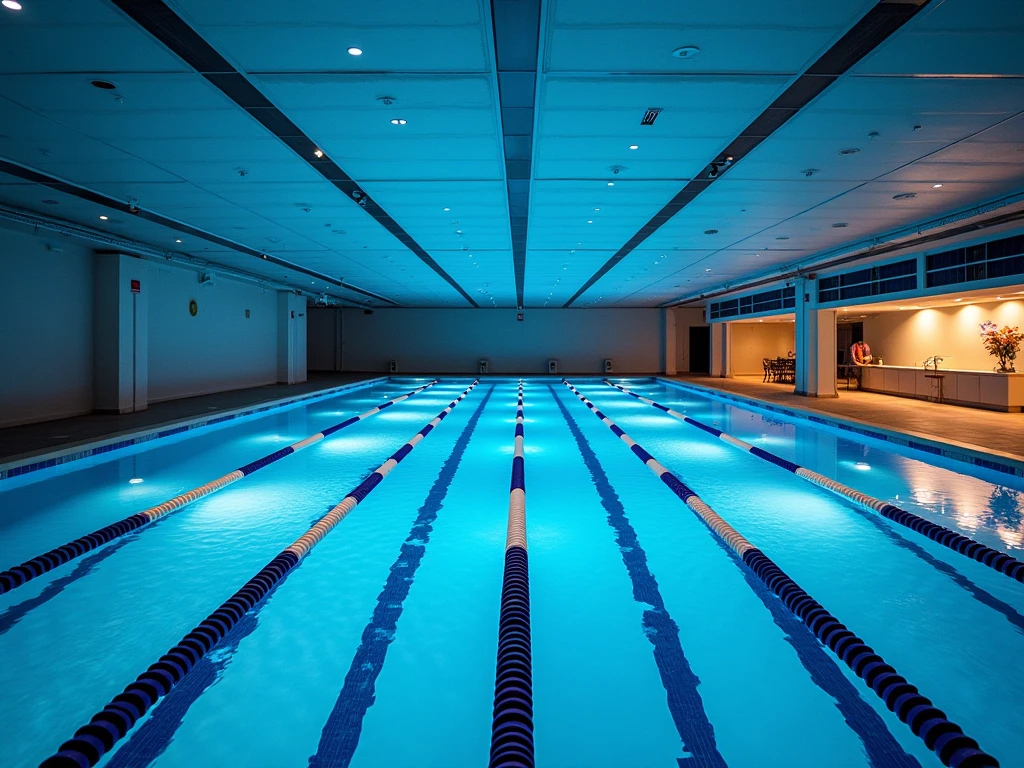
The surround uses certified slip-resistant tiles with grout chosen for frequent chlorinated washing. Mats roll out before high-traffic classes and lift for overnight deep cleans. Drainage lines slope toward trench drains monitored during inspections so puddles do not linger where people stop to adjust goggles.
Seating is limited intentionally: we encourage swimmers to keep bags off the travel line from changing villages to the water so staff retain sightlines for entry and exit. Benches exist, but they hug the wall rather than projecting into the deck.
Ventilation targets a stable band typical of well-run public pools in the United Kingdom. Sensors watch humidity; when condensation fogs the clerestory, duty managers adjust fan stages before glass drips onto the deck. That is a comfort measure, not a promise of tropical warmth—winter sessions can still feel brisk when you first walk in.
Hard surfaces reflect sound: we break reflections with acoustic baffles high above splash height and keep PA gain low. If a session requests music, it routes through a mono cluster aimed at the deck, not at individual swimmers’ ears underwater. You can still hear whistles—we never mask them for atmosphere.
Temperature and basic chemistry are logged at open, midday where a split shift runs, and close. Paper copies sit in the file behind reception; digital backups follow our IT policy.
Rescue tubes, reaching poles, and first aid bags live in fixed stations whose paint matches facility diagrams filed with the landlord. Quarterly audits verify nothing expired.
When a block runs as “quiet,” we match lane density and cap announcements. That does not mean silence outdoors the pool hall, but it does mean fewer beeps and no ad-hoc microphone tests.
Spatial facts live here; chronological facts live on Immersion. Reading both takes longer than skimming one, but the combination removes most of the guesswork people bring to a new pool.
Open Immersion